When You Feel Sick

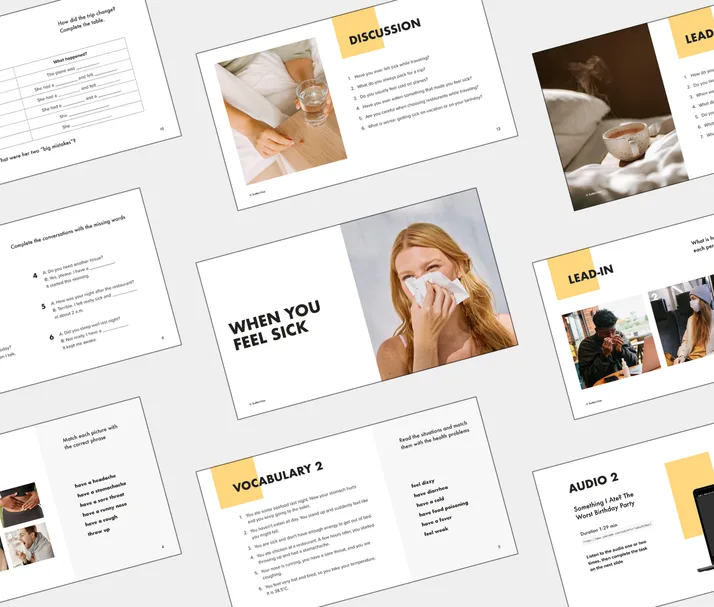
A runny nose is annoying. Food poisoning at 2 a.m. is a different story entirely, and most students only know the word sick for both. This A2 lesson lesson walks students through both ends of getting sick, using simple vocabulary they can use the next time they actually feel unwell, whether at home or on a trip abroad. They practice matching symptoms to situations, finishing short dialogues, and listening to two real stories about vacations gone wrong. The two audio stories give the new vocabulary somewhere real to land instead of staying stuck in a list.
Lesson overview
- Learn 12 phrases for common symptoms and illnesses
- Practice describing symptoms in short, natural conversations
- Listen to two stories about getting sick unexpectedly
- Discuss personal experiences with sickness and staying healthy
Inside this lesson:
- 2 audio clips
Vocabulary
- have a headache
- have a stomachache
- have a sore throat
- have a runny nose
- have a cough
- throw up
- feel dizzy
- have diarrhea
- have a cold
- have food poisoning
- have a fever
- feel weak
Contents
- Lead-In
- Vocabulary 1
- Vocabulary 2
- Practice 1
- Practice 2
- Audio 1
- Questions
- Comprehension
- Audio 2
- True or False
- Discussion
- Speaking
- Transcript
Start with the lead-in questions on slide one. Ask students how they feel today and when they were last sick. This gets them using symptom words before you introduce the target vocabulary, so you hear what they already know and what needs more work.
Move to the picture description activity next. Show the three scenes: the man with a tissue, the woman with a mask, and the man checking his temperature. Ask students what is happening and what each person should do. This works well in pairs because students can disagree about the details, which naturally leads to more talking.
For vocabulary, teach all twelve phrases before the audio stories. Use the matching activity first, then the situation-based practice, so students see each phrase in context rather than just memorizing a list. The two practice conversations give students a chance to plug the new phrases into realistic dialogue before they hear them in a full story.
Both audio stories work as a pair. Play “I Got Sick on My First Day of Vacation” first and have students answer the four comprehension questions, then fill in the table showing how the trip changed hour by hour. The second story, about a birthday dinner gone wrong, uses a true or false format instead, which keeps the second listening task feeling fresh.
Finish with the discussion questions and the ranking activity, where students rank the worst times to get sick. This works as a strong wrap-up because it is personal and usually gets a few laughs.
This lesson was created by
 Oksana
Teaching for 10+ years has taken me across cultures, from living in Asia to working with diverse students worldwide. Now, I focus on general and business English for adults, crafting lessons that are engaging, practical, and inspired by my love for travel, photography, and culture.
on Aug 9, 2026.
Oksana
Teaching for 10+ years has taken me across cultures, from living in Asia to working with diverse students worldwide. Now, I focus on general and business English for adults, crafting lessons that are engaging, practical, and inspired by my love for travel, photography, and culture.
on Aug 9, 2026.
0 comments
Comments are moderated against a short code of conduct. Disagree as much as you like; do it kindly.