Breakfast Around the World
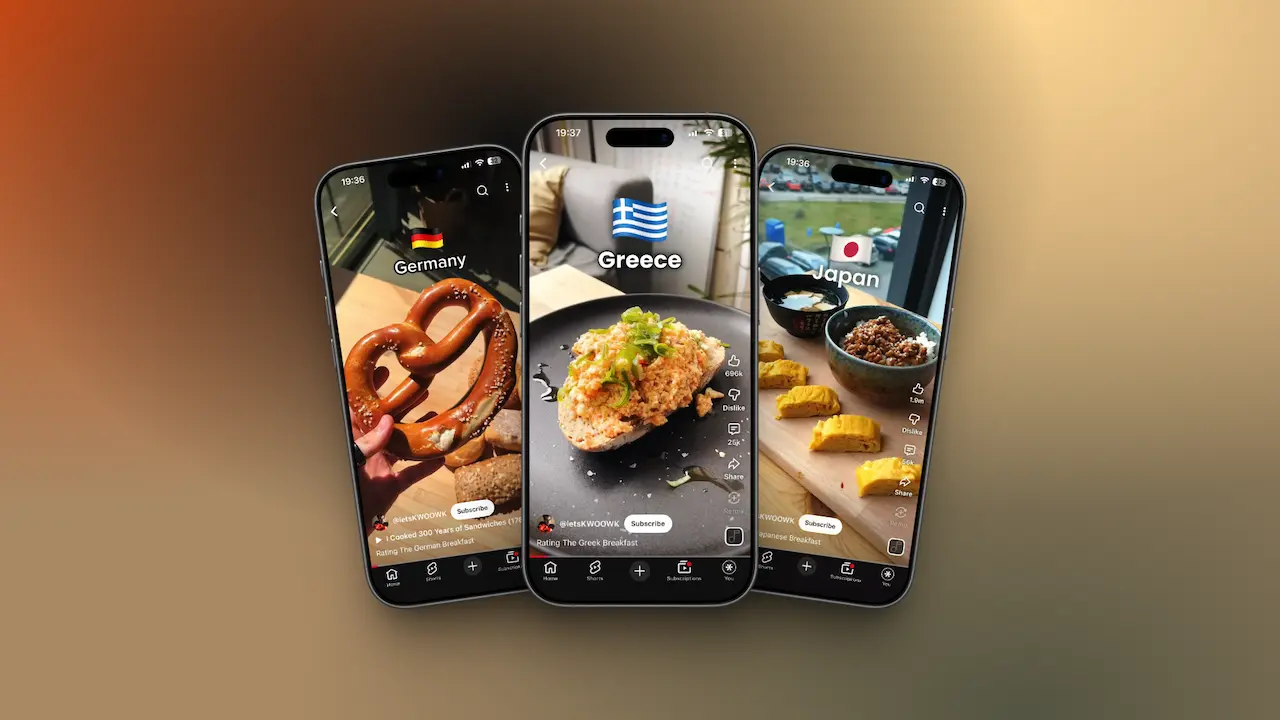
Click the image to watch the video on YouTube
Order breakfast in Tokyo and you might get rice, fish, and miso soup instead of toast. This B1 lesson uses that kind of surprise to get students talking about food from different countries. They watch short videos comparing breakfast in Greece, Germany, and Japan, listing ingredients and giving each meal a score out of ten. A ranking activity with five breakfast photos and a build-your-own-plate challenge push students to defend their food opinions out loud. By the end, even reluctant talkers have something to say about scrambled eggs versus rice.
Lesson overview
- Practice describing breakfast ingredients and traditional dishes from different countries.
- Learn vocabulary for egg dishes like sunny-side up and omelets.
- Discuss personal opinions on healthy, sweet, and savory breakfast choices.
- Build speaking confidence through ranking activities, debates, and breakfast comparisons.
Inside this lesson:
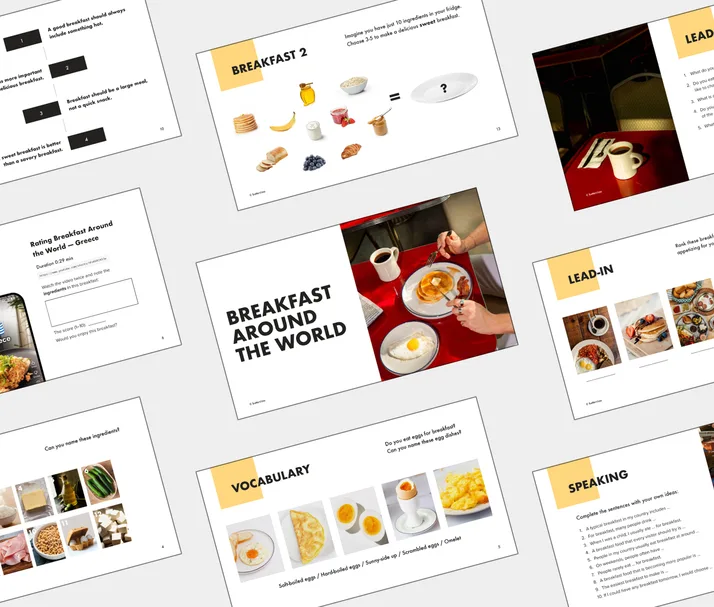
Vocabulary
- Tomatoes
- Bread
- Rice
- Butter
- Olive oil
- Cucumbers
- Cheese
- Garlic
- Cold cuts
- Beans
- Eggs
- Tofu
- Soft-boiled eggs
- Hard-boiled eggs
- Sunny-side up
- Scrambled eggs
- Omelet
Contents
- Lead-in
- Vocabulary
- Video 1
- Video 2
- Video 3
- Questions
- Agree or Disagree
- Speaking
- Breakfast 1
- Breakfast 2
- Homework
Start this B1 lesson with the lead-in questions about students’ own breakfast habits. Ask what they usually eat, whether they change it up, and what counts as a traditional breakfast in their country. This gets everyone talking before you move to the ranking activity. Show the five breakfast photos and have students rank them from most to least appetizing, then guess which country each one comes from. It’s a fun way to introduce food vocabulary without pressure.
Move into the vocabulary slides next. The ingredient photo quiz works well in pairs, since students can compare guesses before you confirm the answers. The egg dishes slide is short but useful, especially for lower B1 students who mix up soft-boiled and hard-boiled. Once vocabulary is set, play the three videos showing breakfast in Greece, Germany, and Japan. Have students watch each clip twice and write down the ingredients they notice. After each video, ask for a quick score out of ten and a reason why.
The country matching questions work well as a whole-class review after the videos. Students decide which breakfast was quickest, healthiest, or most filling, which naturally pushes them to compare details. The agree or disagree statements and the speaking sentence completions are good for smaller groups or pairs. For the two ingredient challenge slides, give students a few minutes to pick three to five items and describe the breakfast they would make. These two activities tend to get loud, which is a good sign.
Wrap up with the homework diary. Ask students to track their breakfast for a week and bring notes to the next class. This breakfast lesson gives B1 students plenty to talk about, and the international angle keeps things interesting even for groups who don’t usually love food topics.
This lesson was created by
 Oksana
Teaching for 10+ years has taken me across cultures, from living in Asia to working with diverse students worldwide. Now, I focus on general and business English for adults, crafting lessons that are engaging, practical, and inspired by my love for travel, photography, and culture.
on Jun 16, 2026.
Oksana
Teaching for 10+ years has taken me across cultures, from living in Asia to working with diverse students worldwide. Now, I focus on general and business English for adults, crafting lessons that are engaging, practical, and inspired by my love for travel, photography, and culture.
on Jun 16, 2026.
0 comments
Comments are moderated against a short code of conduct. Disagree as much as you like; do it kindly.